Cédula de Extranjería: What to Do in Your First 15 Days
This post was reviewed and updated on .
Most foreigners age 7 or older who hold a qualifying Colombian visa valid for more than three months must apply for a cédula de extranjería. The deadline is 15 calendar days after entering Colombia if the visa was issued abroad, or 15 calendar days after the visa was issued if you were already in Colombia.
This guide reflects official sources reviewed on August 15, 2026. It is general information, not legal advice. Immigration rules change, so confirm your case with Migración Colombia or the Cancillería before you start.
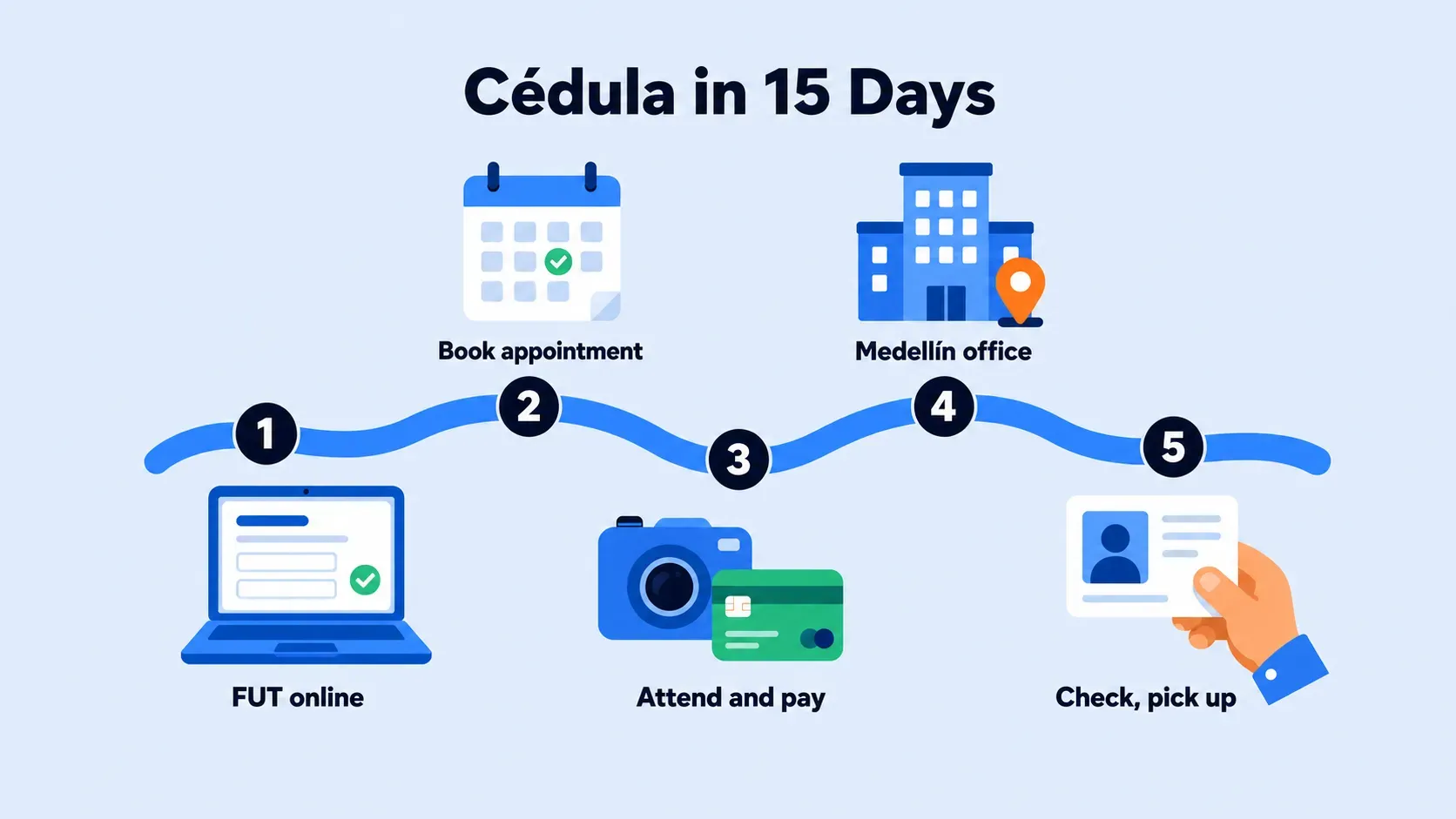
Here is the process at a glance:
Before You Begin
- Check your visa category. The three-month rule has exceptions. Under Resolución 9316 de 2024, holders of V visas for Tourism, Business, Crew, Events, Diplomatic Visitors Courtesy, and International Agreements are exempt from foreigner registration and the cédula, regardless of visa length.
- Prepare one PDF. Migración Colombia asks for one file containing your passport biographical page and valid visa.
- Keep your original passport ready. You must show the valid original at the appointment.
- Budget for the current fee. The general 2026 tariff is COP 294,000. Reduced rates or exemptions apply in limited cases, including certain Ecuadorian nationals and Pacific Alliance scholarship recipients.
- Treat FMP as a separate program. VA Foreign Medical Program eligibility is based on qualifying care received abroad; a Colombian immigration document does not determine FMP eligibility.
Step 1: Submit the FUT Online
Start with Migración Colombia’s Formulario Único de Trámites (FUT).
Select Cédula de Extranjería, choose your service center, upload the single PDF, and save the Código Único de Trámite or radicado number. You will need that number at the appointment.
Step 2: Book Your Appointment
Use Migración Colombia’s official appointment portal and select the cédula procedure and the Medellín service center.
Appointment availability can change. If you cannot find a slot before your deadline, do not wait silently. Use Migración Colombia’s official contact or PQRSDF channels promptly, and keep dated copies of your appointment attempts and correspondence. Those records do not guarantee relief from a deadline or sanction, but they document what you did.
Step 3: Attend and Pay
Bring:
- Your original valid passport
- Your valid visa
- Your FUT radicado number
- Documents proving the relationship or legal authority if accompanying a minor
The in-person enrollment includes a photo, fingerprints, and a digital signature. For the initial cédula, Migración Colombia lists payment during the appointment by debit or credit card, or by bank deposit using a receipt issued by the service center. Its current instructions do not list PSE for this initial application. Officials are not authorized to accept cash.
Step 4: Use the Correct Medellín Office
The official directory lists the Medellín Centro Facilitador de Servicios Migratorios (CFSM) at:
- Address: Calle 19 #80A-40, Barrio Belén La Nubia, Medellín
The posted hours are Monday through Friday, 8:00 AM-12:00 PM and 1:00 PM-5:00 PM. Check the official service-point directory before traveling because hours can change.
Step 5: Check before Pickup
Migración Colombia estimates that the card will be available within 10 business days after payment, although location and access conditions can affect timing. Use the official cédula delivery checker before returning. Pickup is at the CFSM where you completed the process.
Why the Cédula Matters
The cédula is the Colombian identification document for foreigners who are required to hold one; it is not a visa and does not create immigration status. Employers must request it when a foreign worker is legally required to have it.
For Colombian health-system enrollment, SuperSalud confirms that foreigners may use a cédula de extranjería, passport, diplomatic card, or safe-conduct document, as applicable. Having a cédula does not by itself make someone eligible for a particular EPS plan.
Common Mistakes to Avoid
- Assuming every visa over three months requires a cédula. Check the current V-visa exemptions first.
- Counting business days instead of calendar days. The application deadline uses calendar days.
- Waiting for the second week. Complete the FUT and seek an appointment early.
- Using outdated payment advice. Follow the current payment methods on Migración Colombia’s cédula page.
- Going to an airport migration post. Use the Medellín CFSM listed for immigration-service procedures.
When to Get Help
Use Migración Colombia’s official channels for appointment, payment, or document problems. For a visa cancellation, status change, missed deadline, or other case-specific issue, consult a licensed Colombian immigration attorney. An attorney can assess your facts; a blog post cannot.
Sources
- Migración Colombia: Cédula de Extranjería: current requirements, documents, payment methods, deadline, process, and delivery estimate; reviewed August 15, 2026
- Migración Colombia: 2026 tariffs: current general cédula fee
- Migración Colombia: Medellín service point: official address, contact number, and posted hours
- Migración Colombia: Resolución 2061 de 2020: application, enrollment, deadline, and delivery rules
- Cancillería: Resolución 9316 de 2024: current V-visa exemptions from registration and cédula processing
- Migración Colombia: Resolución 0599 de 2026: official 2026 tariff resolution
- Superintendencia Nacional de Salud: Concepto 1140171 de 2024: identification documents for foreign residents’ health-system enrollment
- U.S. Department of Veterans Affairs: Foreign Medical Program: current FMP coverage eligibility and use